
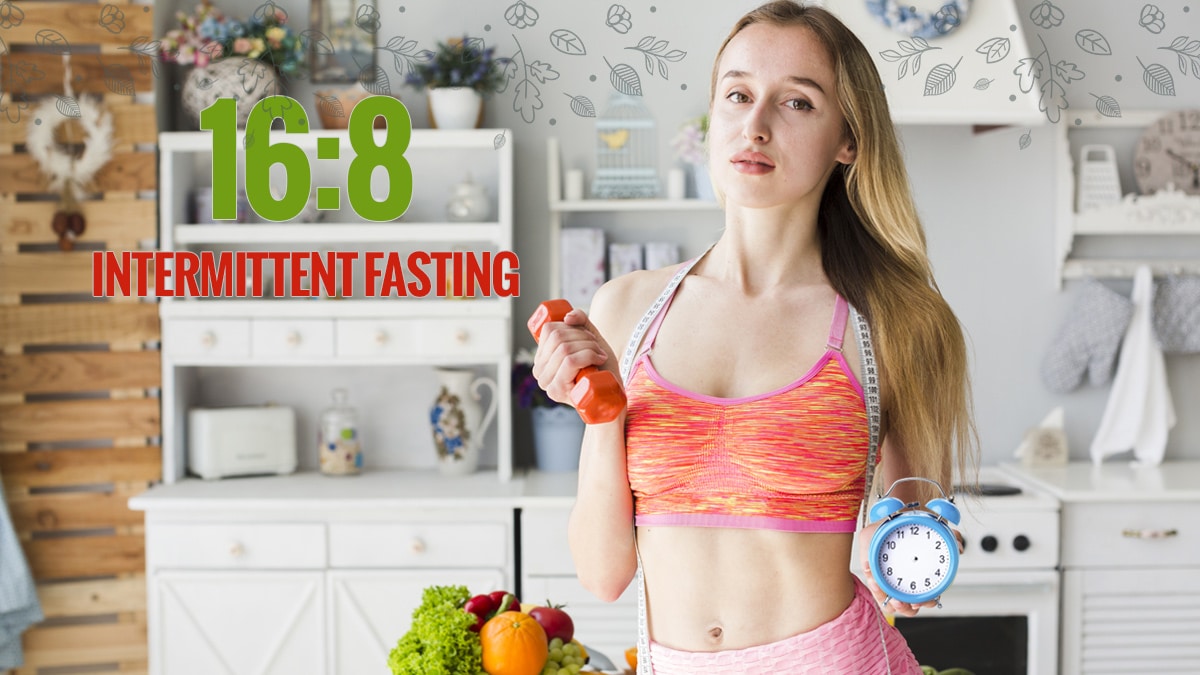
What is 16:8 Intermittent Fasting?
16:8 intermittent fasting has become a popular diet regime in the last few years as many people claim that it leads to weight loss [1].
16:8 intermittent fasting is a time-restrictive fasting diet where an individual will fast for 16 hours of 24 hours and only eat during the 8 hours of the day that the fast is broken. For example, you could eat between 11 AM and 7 PM, then fast for 16 hours until 11 AM the next day. This would mean that you would skip eating breakfast while also eliminating evening snacking.
16:8 intermittent fasting is an easier time frame than other fasting diets. For instance, compared to 24-hour fasting or 20:4 intermittent fasting. A fasting diet that allows you to eat in an 8-hour window appears very doable.
Calculate Your Autophagy Timeline
Find out exactly when your body enters autophagy based on your unique profile, diet, and fasting protocol.
Calculate My Autophagy Window →How to Do 16:8 Intermittent Fasting

16:8 intermittent fasting is a flexible diet that is easy to follow. Just pick an 8-hour time window during the day that you will eat, and leave the remaining 16 hours too fast. While some individuals may choose to eat between 11 AM and 7 PM, it may work better for your schedule if you eat between 1 PM and 9 PM. You can pick when to eat and when to fast, as long as you fast for 16 consecutive hours and only eat within the 8-hour window. Otherwise, you would be preventing yourself from experiencing any results.
Fasting for 16 hours a day may sound intimidating, and it may take some time for your body to adjust, but it isn’t a long fasting period compared to other fasting diets. Basically, all you are doing is skipping breakfast and evening snacking.
If you find that your body is having a hard time adjusting, or if it is negatively affecting your energy levels, you could begin with a modified schedule and ease yourself in. You can begin by increasing your fasting time by one hour to your fast every few days when you are ready. For example, if you usually eat breakfast at 8 AM, eat breakfast at 9 AM instead. Just make sure that your fasting time begins at the same time every evening to remain consistent.
Related: 20:4 Intermittent Fasting Guide and Tips
What Can You Eat on a 16:8 Intermittent Fasting Plan?

The wonderful thing about intermittent fasting is that there are no food or calorie restrictions, only time restrictions. Within the 8-hour eating window, you can eat your meals as you please. However, if you want to experience any of the benefits of intermittent fasting, it would be best to avoid junk foods.
Since there are no guidelines on what hours you should eat between when 16:8 intermittent fasting, it would be best to follow the USDA’s Dietary Guidelines for Americans and eat a healthy diet. The guidelines suggest that individuals consume a diet that is rich in vegetables, leafy greens, fruit, protein, and whole grains [3]. While also limiting added sugars, saturated fats, and sodium [3].
16:8 intermittent fasting is not a calorie-restrictive diet, so you should still consume your recommended daily caloric intake while you are following the fasting plan. The USDA suggests that males between the ages of 19 through 30 should eat between 2,400 to 3,000 calories per day, and females in the same age group should eat between 1,800 to 2,400 calories per day, depending on their individual caloric needs [3].
Don’t forget to stay hydrated when you are in the fasting phase of the day. You are allowed to consume zero-calorie beverages such as water, tea, and black coffee when fasting [2].
Benefits of 16:8 Intermittent Fasting
Weight Loss
Many individuals want to try 16:8 intermittent fasting for the potential weight loss benefits. Studies have shown that intermittent fasting can help individuals lose weight [7, 8, 10].
There are two main conclusions about the effect that intermittent fasting has on weight loss. First, weight loss may occur due to being in a fasted state for longer than average. After you eat your last meal, your body will burn the energy from that meal [3]. When that energy is gone, your body enters into a fasting state, and your body will rely on burning energy from fat stores instead [3, 5]. The other reason individuals lose weight when intermittent fasting is due to being in a caloric deficit [5].

For example, if your daily recommended caloric intake is 2,300 calories per day, but you only eat 2,000 calories in the 8-hour eating window, you would be in a caloric deficit. Any time you are in a caloric deficit for an extended time, you will experience weight loss. Many studies show that individuals who participate in 16:8 intermittent fasting do not lose any more weight than those who participate in calorie-restricted diets [5, 7, 8].
The good news is that intermittent fasting may help you retain muscle mass even if you lose weight, compared to calorie-restrictive diets, which most likely lead to muscle loss [6]. As long as your intermittent fasting diet meets your daily caloric needs and you consume enough protein, intermittent fasting might not have any effect on muscle mass [6].
Increased Satiety
16:8 intermittent fasting may reduce your cravings and appetite, which is what essentially leads to caloric deficits and weight loss [8].
During 16:8 intermittent fasting, instead of consuming food all day long, you are limited to eating all of your meals within an 8-hour window. This can decrease your desire to snack in the evening due to increased sensations of being full [10].
Improved Insulin Sensitivity and Fasting Glucose
Many studies have been conducted to measure the effect that intermittent fasting has on diabetes and insulin sensitivity.
One study, in particular, aimed to find out if intermittent fasting improved insulin sensitivity in men with prediabetes [10]. They found that intermittent fasting improved insulin levels, insulin sensitivity, and cell responsiveness, even when they consumed their daily recommended caloric intake in their eating window [10]. Intermittent fasting may lead to increased insulin sensitivity due to skipping breakfast, as early time-restrictive feeding can improve health [4, 10].
Another study found that individuals with type 2 diabetes who fasted at least twice a week had improved fasting glucose [9]. However, those with type 2 diabetes should fast with caution as they can experience hypoglycemia [9].
Improved Sleep
Intermittent fasting may also improve your sleep. One study found that individuals who fasted for over 14 hours in the day experienced improved sleep [11]. This may be because nighttime eating can disrupt sleep [11]. Cutting out nighttime snacking is highly beneficial in improving sleep quality.

Chronic Disease Prevention
Intermittent fasting may aid in chronic disease prevention. Many studies have found that intermittent fasting may improve the biomarkers of disease [1, 4, 5, 10, 11].
Some studies attribute this to the longer duration of fasting during the night, while others attribute it to skipping breakfast [1, 4, 10, 11]. Either way, it appears that the longer fasting period is what leads to improving the biomarkers of disease.
More research still needs to be done to conclude the effects that intermittent fasting has on chronic disease prevention and the associated clinical outcomes [10].
Potential Risks of 16:8 Intermittent Fasting
Type 2 Diabetes and Hypoglycemia
Individuals with type 2 diabetes avoid intermittent fasting or seek medical advice before attempting intermittent fasting. Intermittent fasting greatly increases a diabetic individual’s risk of hypoglycemia, especially if they take glucose-lowering medications [1, 4, 9].
Other considerations
Intermittent fasting diets are not recommended for those who need to consume calories throughout the day, such as adolescents and those who are pregnant or breastfeeding [1].
Individuals diagnosed with eating disorders should also be cautious to intermittent fast as the prolonged periods of food restriction may foster unhealthy eating behaviors [1]. Intermittent fasting may increase a fixation with food due to an extended fasting period [1].
Overall, intermittent fasting is safe for healthy individuals to do as long as they are not underweight. Only mild side effects may be experienced, such as hunger, headaches, or fatigue while your body adapts to the diet [4].
FAQ
Is 16:8 a good intermittent fasting schedule?
16:8 may be a good intermittent fasting schedule if it works for you as an individual. There is some research about the benefits of intermittent fasting, and it is harmless for healthy individuals. But, if 16:8 intermittent fasting does not suit your lifestyle, other fasting diets may benefit you more. Whether 16:8 intermittent fasting is “good” is an individual decision.
How long does it take for 16:8 intermittent fasting to work?
If you want to experience the benefits of intermittent fasting, such as weight loss, you would have to follow 16:8 intermittent fasting for a few weeks to see results. You will see results if you are in a caloric deficit and eating a healthy and nutritious diet. But, if you eat over your daily recommended caloric intake in your 8-hour eating window, you could gain weight.
What are good times for 16:8 fasting?
The wonderful thing about intermittent fasting is that it is highly flexible. You can plan your 8-hour eating window in a time frame that works for your schedule. You may choose to eat between 10 AM and 6 PM or 12 PM and 8 PM. It is entirely up to you!
Can you drink coffee while intermittent fasting?
Yes, you can drink coffee while intermittent fasting. Coffee does not break a fast as long as it is black coffee without added sugar or cream.
Can you drink Coke Zero while fasting?
While Coke Zero is a zero-calorie drink, it could sabotage the benefits of intermittent fasting due to the artificial sugars and other ingredients. It is best to stick to natural zero-calorie drinks such as water, coffee, and tea.
Learn everything about fasting
- Fasting Electrolyte Calculator - Sodium, Potassium, Magnesium
- PSMF Calculator - Protein Sparing Modified Fast
- Fasting Schedule Generator - Build Your Plan
- Ketosis Calculator - When Do You Enter Ketosis?
- Metabolic Switching Calculator - Fat Burning Timeline
- 5:2 Diet Calculator - Fast Day Calories
- IF Macro Calculator - Intermittent Fasting Macros
- Live Fasting Timer - Track Your Fast in Real Time
- Fasting Progress Tracker - Track Your Journey
- Fasting Protocol Comparison - Find Your Best Method
- Extended Fasting Calculator (24-72+ Hours)
- OMAD Calculator - One Meal a Day Calories & Macros
- Fasting Age Calculator - Biological Age Impact
- What Breaks a Fast? - Complete Food & Drink Guide
- Autophagy Calculator - When Does Autophagy Start?
Wrapping Up
16:8 intermittent fasting is a highly flexible diet that is safe for healthy, overweight, or obese adults [11]. There are very few risks and many potential benefits of intermittent fasting. While research has not determined the best timing for fasting or the best intermittent fasting regimen, 16:8 intermittent fasting may be beneficial to try if you are looking for a fasting diet [4].
As always, make sure to consult with your health provider before beginning any diet and if you experience any side effects.
References
Fitness Volt is committed to providing our readers with science-based information. We use only credible and peer-reviewed sources to support the information we share in our articles.
- Harvard: School of Public Health. (2022, May 17). Diet Review: Intermittent Fasting for Weight Loss. The Nutrition Source. https://www.hsph.harvard.edu
- Johns Hopkins Medicine. (2022, March 7). Intermittent Fasting: What is it, and how does it work? https://www.hopkinsmedicine.org
- U.S. Department of Agriculture and U.S. Department of Health and Human Services. Dietary Guidelines for Americans, 2020-2025. 9th Edition.
- Horne, B. D. (2020). Considerations for the Optimal Timing, Duration, Frequency, and Length of an Intermittent Fasting Regimen for Health Improvement. Nutrients, 12(9), 2567. https://doi.org/10.3390/nu12092567
- Collier, R. (2013). Intermittent fasting: the science of going without. Canadian Medical Association Journal, 185(9), E363–E364. https://doi.org/10.1503/cmaj.109-4451
- Tinsley, G. M., Forsse, J. S., Butler, N. K., Paoli, A., Bane, A. A., La Bounty, P. M., Morgan, G. B., & Grandjean, P. W. (2016). Time-restricted feeding in young men performing resistance training: A randomized controlled trial. European Journal of Sport Science, 17(2), 200–207. https://doi.org/10.1080/17461391.2016.1223173
- Harris, L., Hamilton, S., Azevedo, L. B., Olajide, J., de Brún, C., Waller, G., Whittaker, V., Sharp, T., Lean, M., Hankey, C., & Ells, L. (2018). Intermittent fasting interventions for treatment of overweight and obesity in adults. JBI Database of Systematic Reviews and Implementation Reports, 16(2), 507–547. https://doi.org/10.11124/jbisrir-2016-003248
- Seimon, R. V., Roekenes, J. A., Zibellini, J., Zhu, B., Gibson, A. A., Hills, A. P., Wood, R. E., King, N. A., Byrne, N. M., & Sainsbury, A. (2015). Do intermittent diets provide physiological benefits over continuous diets for weight loss? A systematic review of clinical trials. Molecular and Cellular Endocrinology, 418, 153–172. https://doi.org/10.1016/j.mce.2015.09.014
- Corley, B. T., Carroll, R. W., Hall, R. M., Weatherall, M., Parry-Strong, A., & Krebs, J. D. (2018). Intermittent fasting in Type 2 diabetes mellitus and the risk of hypoglycaemia: a randomized controlled trial. Diabetic Medicine, 35(5), 588–594. https://doi.org/10.1111/dme.13595
- Sutton, E. F., Beyl, R., Early, K. S., Cefalu, W. T., Ravussin, E., & Peterson, C. M. (2018). Early Time-Restricted Feeding Improves Insulin Sensitivity, Blood Pressure, and Oxidative Stress Even without Weight Loss in Men with Prediabetes. Cell Metabolism, 27(6), 1212–1221.e3. https://doi.org/10.1016/j.cmet.2018.04.010
- Patterson, R. E., & Sears, D. D. (2017). Metabolic Effects of Intermittent Fasting. Annual Review of Nutrition, 37(1), 371–393. https://doi.org/10.1146/annurev-nutr-071816-064634